tim kiem

Loading

Chủ Nhật, 18 tháng 12, 2011

Hàng cực kì hiếm !!!


Giá: 5 triệu. (một "phát" một triệu !)

8188881: phát nhất, phát phát phát phát nhất !

Mệnh giá nhỏ nhất nhưng...."phát nhất" !
LH: phailamsao@gmail.com


Giá: 2 triệu.

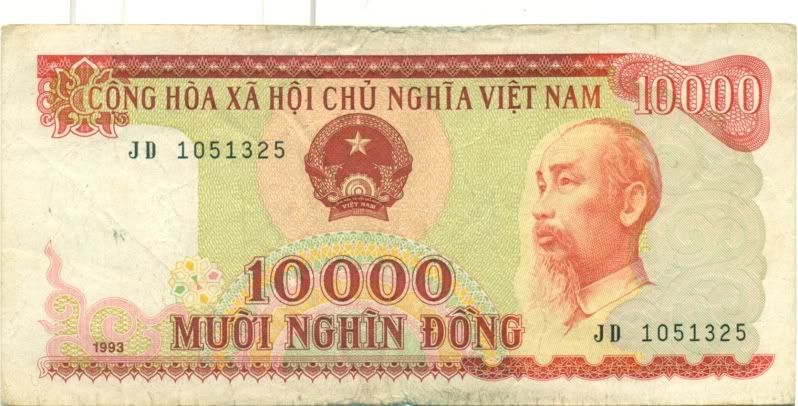
105 : một trăm năm.
1325 : mãi mãi yêu em !

1051325 : Một trăm năm mãi mãi yêu em !


Sắp valentine rồi ai có nhu cầu tặng quà người yêu thì liên hệ mình hen !

LH: phailamsao@gmail.com

Thứ Năm, 15 tháng 12, 2011

autos

http://trexlist.com/splash/autosurf/

ebook.edu.vn.doc

tai lieu thuy san .rtf

che bien-baoquan.rtf

Dat code google vaof 4rum
http://www.nghebao.vn/on/threads/1067-Mot-so-cach-chen-ma-Google-Adsense-vao-VBB

hack forum
http://longit29.wordpress.com/2011/09/13/hack-vbb/
CHmod: http://www.vietvbb.vn/up/archive/index.php?t-2822.html
http://www.diendancongnghe.com.vn/lap-trinh-website/1441-vbb-huong-dan-chmod-toan-chong-local.html

CODE FLASH

tam thoi chua co

http://www.swfcabin.com/open/1323946356
file swf thu

Thứ Tư, 16 tháng 11, 2011

Google opens online music store and free storage locker

Mark Milian, CNN
Google's Jamie Rosenberg announces the Google Music store and locker in Los Angeles.

(CNN) -- Google opened an online music store and a free Web storage locker on Wednesday for listening to tracks from computers, tablets and phones, the company announced at a news conference in Los Angeles.

The music store sells songs and albums for prices comparable to iTunes and Amazon MP3, but Google's catalog is smaller. The storefront can be found in the Android Market, an application and website where Google smartphone users can download apps.

Songs purchased from the store are automatically uploaded to Google Music, a locker that can be accessed from an app coming to recent Android phones and tablets in the next few days, or from a website. They allow users to stream songs from their various devices.

The Google locker service launched to a small group in May, and it opened to everyone in the United States on Wednesday. Google Music is free for storing as many as 20,000 songs.

More than half of all smartphones sold worldwide in the last quarter run Google's Android software, according to market research firm Gartner. Google said more than 200 million devices have been activated.

But in the music download market, Apple is king, selling more than half of all U.S. downloads through its iTunes Store, analysts say.

Apple took steps to broaden its offering with the belated launch of iTunes Match on Monday. ITunes Match is similar to Google Music in that it allows customers to store their music catalogs, up to 25,000 songs, on Apple's servers and access them from their computers, iPhones and iPads. Match costs $25 per year.

Google executives announce the Google Music store and locker at a news conference in Los Angeles.

"At Google, digital music has become fundamental to many things we care very much about," Jamie Rosenberg, Google's director of content for Android, said onstage at the news conference. "Other cloud music services think you have to pay to listen to the music you own. We don't."

ITunes Match has a technological leg up on Google because subscribers can upload their libraries much more quickly. That's thanks to Apple's deals with the music labels that allow it to provide customers with access to the high-quality versions of songs that iTunes sells. With Google Music or Amazon.com's Cloud Drive, users with a lot of music may have to wait several days for their entire catalogs to upload.

The iTunes Store has about 20 million songs, whereas Google has 8 million. Google has signed deals with three of the big four record labels. Warner Music Group, the third largest, whose musicians include Death Cab for Cutie, the Grateful Dead, Muse and T-Pain, is a holdout. Even without Warner, Google said it will add 5 million songs over the next several months.

Customers of T-Mobile USA's cellular network will be able to charge songs to their phone bills rather than setting up a Google account with a credit card.

After buying a song through Google Music, customers can share the track on the Google+ social network. Not surprisingly, Google Music will not integrate with Facebook Music, the aggregation service that launched recently from Google's social-network rival.

Google touted that, unlike other music stores, people who find songs through Google+ will be able to listen to each one in full for free one time before they buy. ITunes only provides 90-second previews. Google has also secured exclusive access to live records from popular bands including Coldplay and the Rolling Stones. Apple is still the only music-download store that has the Beatles.

Tech giants say SOPA piracy bill is 'draconian'


@CNNMoneyTech November 16, 2011: 6:10 PM ET
Tech giants say SOPA piracy bill is 'draconian'

Tech companies say Congress' anti-piracy bills are 'draconian' and 'deeply flawed.'

NEW YORK (CNNMoney) -- A proposed new bill intended to combat online piracy has sparked a giant backlash from big tech companies, including Google and Facebook, who say the proposals are far too strict and rife with unintended consequences.

The Stop Online Piracy Act (SOPA), which was introduced in the House of Representatives in late October, aims to crack down on copyright and trademark issues. Its targets include "rogue" foreign sites like torrent hub The Pirate Bay.

Protecting content is a worthy goal, but here's the flip side: Opponents say SOPA -- and a similar bill called the Protect IP Act that is making its way through the Senate -- effectively promotes censorship.

If SOPA passes, copyright holders would be able to complain to law enforcement officials and get websites shut down. The law would also force intermediaries like search engines and payment processors to withhold their services from targeted websites.

That would be quite a change from the 1998 Digital Millennium Copyright Act, which mandates that companies "act in good faith" to remove content that infringes on copyrights and other intellectual property laws.

Google (GOOG, Fortune 500) executive chairman Eric Schmidt called the bill "draconian" during a speech in Boston on Tuesday.

Google and other tech behemoths -- AOL (AOL), eBay (EBAY, Fortune 500), Facebook, LinkedIn (LNKD), Mozilla, Twitter, Yahoo (YHOO, Fortune 500) and Zynga -- also lodged a formal complaint on Tuesday in the form of a letter sent to key Senate and House lawmakers.

"We support the bills' stated goals," the letter reads. "Unfortunately, the bills as drafted would expose law-abiding U.S. Internet and technology companies to new uncertain liabilities [and] mandates that would require monitoring of web sites."

The companies are asking Congress to "consider more targeted ways to combat foreign 'rogue' websites."

SOPA's critics -- some of the Internet's most heavily trafficked sites -- launched an awareness campaign on Wednesday. Hundreds of sites adopted black "STOP CENSORSHIP" logos, including BoingBoing, Reddit and the Electronic Frontier Foundation.

One site tried to annoy consumers into action. Blogging site Tumblr blacked out words in its content feeds, and a message at the top of users' dashboards read: "Stop The Law That Will Censor The Internet!"

"Congress is holding hearings today and will soon pass a bill empowering corporations to censor the Internet unless you tell them no," Tumblr wrote in a post Wednesday, calling the bills "well-intentioned but deeply flawed."

Meanwhile, SOPA has drawn support from groups including the Motion Picture Association of America and the Recording Industry Association of America, which say that online piracy leads to job loss.

Proponents of the bill dismiss accusations of censorship.

The legislation would "[prevent] those who engage in criminal behavior from reaching directly into the U.S. market," Judiciary Committee Chairman Lamar Smith, who introduced the bill, said in a statement Wednesday. "We cannot continue a system that allows criminals to disregard our laws." To top of page

The re-appearing Gmail app for Apple iOS

John D. Sutter, CNN
Google says it
Google says it "messed up" by releasing a Gmail app for iOS that barely functioned.

(CNN) -- Two weeks ago, Google published its much-anticipated Gmail app in the Apple app store.

It didn't work. So the company had to yank the app.

And now it's back again.

On Wednesday the Mountain View, California, company said it had "fixed the bug and notifications are now working, and the app is back in the App Store."

Google offered no new apology for the screw-up, and said the app would continue to improve:

"We're just getting started with the Gmail app for iOS and will be iterating rapidly to bring you more features, including all the ones listed above plus many more," Matthew Izatt, a product manager, wrote on Google's Gmail blog. "Based on your comments we have already improved our handling of image HTML messages - they are now sized to fit to the screen and you can pinch to zoom in. "

The company added:

"In the short time the app was public we received a lot of helpful feedback and feature requests."

On November 2, the company offered an apology to users, who complained the app didn't work.

"The iOS app we launched today contained a bug with notifications," the company wrote on Twitter. "We have pulled the app to fix the problem. Sorry we messed up."

The whole ordeal led at least one tech writer to lose his faith in the company's innovative potential.

"They release something, and I no longer have any faith that it's going to be any good," MG Siegler wrote on his personal Tumblr blog. "It's hard to get excited about a company like that. It's the same reason why it's hard to get excited when Microsoft and Yahoo release new things. The track record just isn't there any more. The faith is gone."

At least some initial feedback about the re-released app was positive.

"I really like it, the UI is great - don't know what all these people are complaining about," one person wrote on the app's page in iTunes Preview.

Overall, the app had a three-of-five-star rating on that page.

Technology and concerts: What not to do


Andrea Bartz and Brenna Ehrlich say that when you're at a concert, talking on the phone is not OK.

Editor's note: Brenna Ehrlich and Andrea Bartz are the sarcastic brains behind humor blog and book "Stuff Hipsters Hate." Got a question about etiquette in the digital world? Contact them at netiquette@cnn.com.

(CNN) -- Going to see live music has always been wrought with frustrations -- and now, along with the ogre who appears in front of you as soon as the band takes the stage, mosh pits and the dreaded "all ages" show -- you've got smartphones. Yup, it's society's technological crack pipe, without which we'd all be fiending freaks, tapping vaguely at the air in agonizing fits of withdrawal.

Mobile phones can add flavor to a show when a band has gotten hip to technology -- for instance, jam band Umphrey's McGee regularly holds a "UMBowl" live show during which fans can do things such as text requests for songs. And bands such as Data Romance have started giving away free tunes via Bluetooth. But for the most part, a phone is about as welcome during a live show as this poor woman's failed Beyonce singalong.

Here are three instances in which you should put your smartphone on hold.

The unofficial photographer

Remember when folks used to raise their lighters aloft to show appreciation for the band busting their hearts to shreds up there on the hallowed stage? Well, now said lighters have been replaced by cell phones (and, in some horrifying cases, iPads.)

We understand the urge to take a quick snap of a show to prove that you were there -- all those "likes" and comments on Instagram are like the crack in the aforementioned crack pipe -- but must you hold your iPhone above your head the entire show, blindly shooting into the ether?

Unless you're super close to the lip of the stage (in which case you're blinding the poor theremin player with your insistent flash), those shots you keep pumping out can't be that good. And, more importantly, you're likely blocking someone's view. Even worse is if you're taking video rather than photos, steadily shooting for the entire 30-minute set. (And, really, when are you ever going to watch that tinny, bottom-of-a-well video?)

If you're so down to document your concert-going experience, might we suggest downloading video-sharing app Viddy rather than using your phone's native camera? Viddy only allows you to shoot for 15 seconds, which is just about the cut-off point where posterity-making becoming perturbing.

Bonus: A lot of bands use the platform and some, such as Panic! At The Disco, have held contests where they crowdsourced concert footage for music videos. Participate in one of those, and you can knock that "un" off of "official."

The ringer

We reaaaally shouldn't have to say this at this point, but when you're at a show, talking on the phone is not OK. Yeah, most concerts are so eardrum-bursting that you'll likely wreck your voice from all that singing along (or guttural screaming upon seeing your favorite musician gyrate his hips), but somehow that dude next to you yelling, "What?! Where are you? I'm to the left of the guy in the Easter hat who smells strongly of pot. To the LEFT!" cuts through all the clutter.

Instead of using the phone portion of your mobile (who does that, anyway?), just do what the teens do and stick to texting. There's tons of group-texting apps that allow you to chat with all of your concert-going friends at the same time -- Fast Society for Android and iOS was created for this very purpose. Go ahead and download FS so that no wo/man will be left behind -- or stuck behind the dude in the Easter hat. Sidenote: Take off hats at shows, especially if you are the aforementioned ogre.

The multitasker

Look at you there, checking your e-mail, reading your tweets, playing that next sick move on Words With Friends. Bam! You just answered a message on OkCupid. Zip! You just checked in on Foursquare! Boom! Yelped you some dinner plans. Um, did you fail to notice the band pouring their guts onto that there stage? Do they not amuse you?

Yeah, it's fine to whip out your smartphone on the elevator to avoid the oh-so-awkward glances of your fellow office drones, but you paid money to see a show and shouldn't you be watching ... well ... the show?

Seriously, cell phone junkies should be ejected from concert venues with the same savagery as that guy who reached out and tried to molest the drummer's head during soundcheck.

If you're looking for a more passive social music listening experience, why not save the $30 bucks you shelled out to see your favorite K-Pop band and stay home with Myxer Social Radio, a new Web platform/iOS app that merges Turntable.fm with Pandora. It's basically a musical chatroom that allows you to passively listen to a stream of music dictated by your tastes.

Oh, and while you're at, can we have that extra concert ticket?

Energy Secretary Chu defends Solyndra loan


@CNNMoneyTech November 16, 2011: 4:27 PM ET
Energy secretary Steven Chu has hit back at criticism of a government loan program for renewable energy in the wake of the Solyndra scandal, saying the U.S. must

Steven Chu will appear before the House Energy Committee on Thursday to discuss the Solyndra scandal.

NEW YORK (CNNMoney) -- Energy secretary Steven Chu is hitting back at criticism of a government loan program for renewable energy in the wake of the Solyndra scandal, saying the U.S. must "compete or accept defeat" in the clean tech race.

In remarks prepared for delivery before a Congressional committee on Thursday, Chu said the government should not waver in its support for clean energy despite potentially being on the hook for more than $500 million after Solyndra's bankruptcy.

"While we are disappointed in the outcome of this particular loan, we support Congress' mandate to finance the deployment of innovative technologies, and believe that our portfolio of loans does so responsibly," Chu said.

"In the coming decades, the clean energy sector is expected to grow by hundreds of billions of dollars. We are in a fierce global race to capture this market."

Solyndra was a California solar panel manufacturer that had received $535 million in federal loan guarantees before it was forced to halt operations and file for bankruptcy at the end of August, putting more than 1,000 employees out of work.

Solyndra failure shows rift over taxpayer role

Before its failure, the company had been touted as an example of the benefits of creating green jobs by the Obama administration. But since then, it has become the center of congressional criticism and a probe by the FBI.

House Republicans are now investigating whether Solyndra received preferential treatment because one of its key investors was a fundraiser for President Barack Obama. Staff from the Department of Energy, Chu said, have "consistently cooperated" with this investigation, participating in interviews and providing thousands of pages of documents.

"As this extensive record has made clear, the loan guarantee to Solyndra was subject to proper, rigorous scrutiny and healthy debate during every phase of the process," Chu said.

Former Solyndra CEO Brian Harrison and fellow executive W.G. Stover were called before the House Subcommittee on Oversight and Investigations in September to testify on the case, maintaining that no wrongdoing took place at the company but repeatedly invoking their 5th amendment right not to answer questions.

What went wrong at Solyndra

Some American solar manufacturers have alleged that Chinese firms including Suntech (STP) and Yingli (YGE) are unfairly "dumping" their products at below market value, making it impossible for U.S. companies to compete. The Commerce Department said last week that it would launch an investigation of the issue.

Meanwhile, the December futures contract for West Texas Intermediate oil was up more then $3 a barrel to $102.53 in afternoon trading Wednesday. The last time oil broke the $100 mark was on July 26. To top of page

Netflix subscribers offered class-action payout from Wal-Mart


@CNNMoneyTech November 16, 2011: 3:07 PM ET
Netflix subscribers offered payout from Wal-Mart class-action lawsuit

NEW YORK (CNNMoney) -- Millions of current and former Netflix customers woke up Wednesday to an e-mail about a class-action lawsuit involving the price of online DVD rentals.

It's legit, and it's the latest twist in a legal saga that started two years ago.

In May 2005, Wal-Mart and Netflix struck a pact: Wal-Mart would scrap its struggling DVDs-by-mail subscription service and instead encourage its customers to sign on with Netflix. In return, Netflix agreed to promote Wal-Mart's DVD sales business.

But in 2009, a group of Netflix subscribers banded together and filed a lawsuit charging the two companies with collusion. The gist of their complaint is that the two companies agreed to carve up the market and stay off each others' turf: DVD rentals for Netflix and DVD sales for Wal-Mart. The deal helped Netflix entrench itself as the market's dominant player and raise its subscription prices, the lawsuit alleges.

Last year, a California judge certified the lawsuit as a class action, bringing Netflix's entire subscriber base into the lawsuit. He has not yet ruled on the merits of the case.

Wal-Mart (WMT, Fortune 500) decided to take its chips off the table. It agreed earlier this year to settle the case, without admitting any fault. Netflix (NFLX) is continuing to fight and remains in litigation.

"We believe the lawsuit has no merit and we will continue to aggressively defend it," Netflix spokesman Steve Swasey told CNNMoney.

The Wal-Mart settlement class includes anyone in the U.S. or Puerto Rico who paid a Netflix subscription fee for DVD rentals from May 19, 2005, through September 2, 2011. More details on the lawsuit are available at www.OnlineDVDclass.com

Under the terms of the proposed settlement, Wal-Mart will pay $27.25 million in cash and gift cards -- but a good chunk of that money will go to the lawyers. Subscribers could take home mere pennies.

The legal team that brought the lawsuit is asking the court to award attorneys' fees of up to 25% of the settlement cash, totaling $6.8 million, plus other costs estimated at $1.7 million. The suit's lead plaintiffs -- the Netflix subscribers who brought the complaint -- would receive a proposed $5,000 each. The remaining money would be split up among those who fill out a claim form and put in for their share of the settlement.

That leaves an estimated $18 million or so to be divvied up over a class that could include millions of people. Netflix had nearly 24 million U.S. subscribers as of Sept. 30, the company said in its third-quarter earnings report. If even half of them were to file claims, each claimant would receive a payment of around $1.50.

Netflix subscribers have until Feb. 14 to file a claim if they wish to be included in the settlement. The judge overseeing the case will hold a hearing in March about the settlement's proposed terms, and will decide whether to uphold or reject the deal.

In an ironic twist, Netflix and Wal-Mart aren't so buddy-buddy these days. Last year, Wal-Mart launched a streaming movie service that takes direct aim at its former partner. To top of page

Chủ Nhật, 6 tháng 11, 2011

Groupon spikes 31% in IPO


@CNNMoneyTech November 4, 2011: 4:26 PM ET
groupon ipo

NEW YORK (CNNMoney) -- Shares of daily deals site Groupon closed at $26.11, roughly 31% above their initial offering price in the public debut of the stock on Friday.

Groupon (GRPN) had priced its initial public offering at $20 a share late Thursday, the last step on a rocky journey to its debut. Under the ticker GRPN, Groupon began trading Friday at about 10:45 a.m. ET on the Nasdaq stock exchange, and opened at $28, 40% above the target.

Raising $700 million for the company, Groupon's IPO was the second-biggest tech IPO in history, behind the $1.7 billion Google raised in 2004.

The stock ticked up as high as $31.14 before falling back to around $28 later in the morning. In mid-afternoon trading it remained in that range, at $28.29, and then slipped a bit just before the close.

Groupon ended the day with a valuation of more than $16 billion. At that price, the pioneering coupon company is worth more than many traditional retailers, including Whole Foods (WFM), Best Buy (BBY, Fortune 500) and Bed, Bath & Beyond (BBBY, Fortune 500).

Because of Groupon's recognizable name and cachet, some stock analysts had expected an even bigger rise at the open, particularly because a miniscule number of shares were being offered. At the last minute, Groupon's underwriters threw in an additional 5 million shares to make the offering 35 million shares.

That's still only around 6% of the company's outstanding shares -- a very small amount, given the public's interest in the company.

"I think 'highly disappointed' is the operative phrase," said David Menlow, president of IPOfinancial. "With such a limited number of shares offered in what could have been unlimited demand, I thought thought the markets should have responded better. Now that it didn't happen, it's causing people to take a second look at the company's fundamentals."

Those fundamentals aren't pretty: Since the moment Groupon filed its paperwork, it's been hit with criticism for unorthodox accounting measures, which led to several downward revisions of its financials.

Groupon's initial filing in June drew heavy scrutiny for the company's reliance on a nonstandard metric called "adjusted consolidated segment operating income." The unwieldy "ACSOI" stripped out Groupon's steep costs for marketing and acquiring new subscribers.

Under pressure from regulators, Groupon re-filed in August to instead use only standard accounting procedures. As a result, the operating profits that Groupon cited in its first filing became operating losses.

Then, in late September, Groupon revised its reported revenue to "correct for an error" -- namely, including in its revenue the cash it has to hand back to merchants for their share of the coupons Groupon sells. That effectively whacked Groupon's sales in half, to $688 million for the first half of 2011, down from the $1.5 billion it claimed previously.

Tech IPOs this year: Several other online companies have gone public in 2011 -- and while they've generally done well on their first trading days, their longer term performance is mixed.

In an ominous sign for Groupon, professional networking site LinkedIn's (LNKD) announced late Thursday that it would offer another $100 million in stock to raise even more money for the company following its May IPO.

Shares more than doubled after LinkedIn's IPO, even though the company turned only slight profits in 2010 and 2006, and has otherwise has been in the red every year since its 2003 inception. The stock is still trading well above its IPO price, but shares fell 7% Friday after it announced a $1.6 million loss for the third quarter.

Other tech IPOs posted gains on their first day and then fizzled. Internet radio service Pandora (P) performed well in its IPO, even though the unprofitable company had warned investors that it expected to continue losing money "through at least fiscal 2012." But shares are down more than 15% since its debut, and they're trading below the IPO price.

Shares of Demand Media (DMD), an online content creator that faced its own accounting smackdown, closed 33% higher on its first day. Those shares are now trading below $8, compared with the IPO price of $17.

Groupon's IPO could set the stage for Zynga -- the gaming company filed in June and is rumored to start trading this month -- and serve as an indicator of the overall IPO market. To top of page

Review: Sharp, witty 'Uncharted 3' succeeds in hero's latest quest


From a vast desert to historical chateaus, the scenes in
From a vast desert to historical chateaus, the scenes in "Uncharted 3" are beautifully rendered.

(CNN) -- With lessons learned from previous titles and a sense of finality to the franchise, "Uncharted 3: Drake's Deception" exceeds expectations with a wonderful storyline, dynamic action and witty dialogue from its characters.

The latest in the franchise from Naughty Dog, "Uncharted 3" returns to follow hero Nathan Drake on yet another historical adventure that promises fortune and glory but invariably involves a lot of danger. As in games past, Nathan is a treasure hunter who follows clues to find lost riches in far-off lands and gets help from other characters in his missions.

The game's storyline follows the path of "Seven Pillars of Wisdom," the T.E. Lawrence book that inspired the epic movie "Lawrence of Arabia." Amy Henning, the writer for the "Uncharted" series, pulls elements from Lawrence's book and weaves them into a stunning narrative about Nathan's search for a lost city called Iram of the Pillars.

Video game review: "Uncharted 3"
Available now for the Play Station 3 console

Price: $59.99

Rating: T, meaning its content may be suitable for ages 13 and older

Keith Guerrette, lead visual effects artist from Naughty Dog, said Henning really opened up the characters in the game and delves deeply into Nathan's past as well as his connections to his companions. While some of the story is told in flashbacks, it never feels disjointed or out of place and flows with the action in the game.

The pace, for the most part, is quick and occurs over several different types of environments. From a vast desert to historical chateaus, the scenes are beautifully rendered and help deepen the moment. There were a couple of missions that bogged down the story in places, but those were few and far between.

Many times, I felt like I was in an "Indiana Jones" movie. There were moments when the gameplay was very similar to what I've seen on the big screen. For example, one mission had me chasing after a caravan transporting my longtime friend, Victor Sullivan, through a narrow cavern in a scene that was reminiscent of "Raiders of the Lost Ark."

Like Dr. Jones, Nathan has to solve puzzles and use his journal to reference solutions. The puzzles were not extremely challenging once the clues in the journal were deciphered. There are other little touches that are Jones-esque, but they add to the story rather than taking away from it. The action is high adventure with a twist of humor and whimsy along the way.

The dialogue helps keep the mood light as character banter flows naturally and feels like what it is -- conversations between people who don't take themselves too seriously but have experienced life-changing events. There is humor, caring, concern and sarcasm that one would expect from longtime friends. It feels natural and gets the player emotionally involved.

"We've been building up to this one," Guerrette said. "We went in thinking, 'How can we take our tech and art and make them even better?' "

There are subtle effects in the environment, like shadows from a fire, ripples in water and disappearing footprints in sand. But the most dynamic action fills the screen during intense missions in which Nathan takes on his enemies while the background moves.

Much of Nathan's movement occurs along the sides and rooftops of buildings, like the "Assassin's Creed" games. That motion becomes more challenging when floors and walls are also moving around.

The game's combat has been fine-tuned but still seemed uneven at times. Guerrette said the development team worked hard to eliminate some of the cover problems that were evident in previous titles. Melee was improved (I enjoyed getting up close and personal with my enemies) and moving while firing is nearly mandatory.

Stealth has become a more effective tool in some missions. There was one mission, however, where I used stealth to eliminate all the bad guys and avoid raising the alarm -- only to discover two bandits guarding a door that I could not stealth kill. It was a little bit frustrating to work so hard on being stealthy when there was no way to avoid having to be obvious to advance.

Targeting specific areas on enemies also didn't seem to matter. There were times when I shot an enemy multiple times in the head before he would fall down. Yet it would take the same number of shots to an enemy's arm to get him to collapse.

Nathan can also throw back grenades that are tossed his way. The audio is funny, but the effects are devastating.

A split-screen co-op version (a fan request) offers a unique story with the chance to unlock multiplayer bonuses and skills. This version can be played either on or offline.

The multiplayer version also features improved cinematic techniques, boosters and the ability to upload great (or not-so-great) gameplay moments into social media platforms. A buddy system can be used for cooperative play in multiplayer mode, or you can go it alone during competitive play.

"Uncharted 3" is an outstanding adventure game that gives you a feature-film feeling. The environments are open and interactive. The story is unique and fresh. And the characters are portrayed in ways that make them feel real and emotional.

While developers wouldn't say if this was the final act for Nathan Drake, there are moments in the game that answer lingering questions from previous games. Those are the "aha" moments that put an extra shine on a wonderful game.

If this is the end, "Uncharted 3" provides a fitting conclusion with an immersive game that keeps players invested until the final treasure is obtained. Popcorn not included.

Black (and Blue) Berry: What's next for RIM?


@CNNMoneyTech November 4, 2011: 12:54 PM ET
Shares of the Ontario-based Research in Motion have plunged as investors worry about weak sales of BlackBerry phones and PlayBook tablets.

Shares of Ontario-based Research in Motion have plunged as investors worry about weak sales of BlackBerry phones and PlayBook tablets.

NEW YORK (CNNMoney) -- You don't win anything for fourth place. In the world of smartphones and tablets, investors seem increasingly nervous that BlackBerry maker Research in Motion will not make it to the medals podium.

Competition in the mobile device industry is brutal. Apple (AAPL, Fortune 500) and companies running on Google's (GOOG, Fortune 500) Android are winning the biggest raves from consumers and investors. Then there's Microsoft (MSFT, Fortune 500), which has hitched its operating system wagon to Nokia (NOK) on the hardware side.

paul_lamonica_morning_buzz2.jpg

That leaves RIM (RIMM) in an unenviable position. Its stock has plunged more than 67% this year. Notable missteps -- including a lengthy global service outage and delays with its newest PlayBook tablet -- are only making things worse.

But has the company been punished enough? At $19 a share, the stock is now trading around book value, which is what a company is worth when you subtract its liabilities from its assets. In theory, it's what a company is worth if it were to be liquidated.

Things aren't going great at RIM. But they're not that bad, right?

Well, let's just say that the RIM bears do have a strong case.

Analysts expect the company's per-share earnings to fall nearly 25% in the fiscal year ending this coming February and to be flat in fiscal 2013. Based on momentum, it won't be a surprise if analysts eventually trim their forecasts further and predict a profit decline for fiscal 2013.

BlackBerry PlayBook price drops to $299

Simply put, RIM needs a device or devices that can excite consumers. It can't just rely on its core "enterprise" market of big businesses. Yes, it still has an impressive list of about 70 million subscribers, but it is losing market share.

According to research and estimates from Canaccord Genuity analyst Michael Walkley in Minneapolis, RIM was second in global smartphone market share in 2008. With 16.2% of the customer base, RIM's piece of the pie was behind only Nokia's.

But by the end of next year, Walkley predicts that RIM's market share will have been nearly cut in half, falling to just 8.4%. That would leave RIM trailing new industry leader Samsung, as well as Apple, Nokia and HTC.

That's what scares investors. Even though RIM has actually been adding subscribers over the past few years, because the overall smartphone market has gotten bigger, it is losing share.

Tech stocks are valued on their growth versus their competitors. Treading water -- or worse -- against your rivals won't cut it.

"Tech stocks with poor fundamentals could stay cheap forever. It's hard for us to see how RIM can stay competitive against Apple and Android," Walkley said.

Shaw Wu, an analyst with Sterne, Agee and Leach in San Francisco, agreed. He pointed out that investors are looking at RIM's current troubles and are pricing in an increasingly bleak future.

Wu said the recent BlackBerry e-mail glitch may have been the last straw for some investors -- even though there is the promise of new phones coming soon, running on BBX, a combination of the BlackBerry operating system and the widely hyped QNX operating system.

"It's pretty sad what's happened. RIM still has a shot to turn it around," Wu said. "But the service outage did not help. It's unacceptable and they have nobody to blame but themselves."

So even though RIM still has much in its favor and is not on the precipice of imminent financial disaster, Wu said investors can't help wondering if RIM is even capable of regaining its former leadership role.

"RIM is not going to be losing money anytime soon, but people fear that may happen down the road. It's like what happened with Nokia. People once thought it could never lose money, and then it did," Wu said.

Sales and profits plunge at RIM

Still, RIM may have little downside left at this point. Alkesh Shah, an analyst with Evercore Partners in New York, said that the stock has probably bottomed in the near-term.

Shah maintains that RIM's $1.4 billion in cash and more than 10,000 patents should serve as a floor for the stock. That last point is key. Tech giants are engaging in a patent war and many once struggling companies have become attractive because of their intellectual property.

Google bought Motorola Mobility largely as a patent play. And on Thursday, mobile software company Openwave Systems announced a deal to license patents to Microsoft. Shares of Openwave (OPWV) rose nearly 10% Friday.

"Openwave is another reminder of the value of intellectual property," Shah said. On the flip side, he thinks that the patents merely protect RIM from further share declines.

"RIM still has significant challenges," he said. "It won't bounce anytime soon, since there is no catalyst until the phones on the next operating system comes out sometime in 2012."

Reader comment of the week .. and run, Mrs. Buzz, run! Lots of tweets this week about the craziness in Europe. Stocks moved up and down on the latest rumors, which were flying fast and furious from across the pond

My favorite comment came from a Twitter follower who goes by the name of @sharkridingbear on Twitter. He doesn't give his real name either, as he is signed up as "lloyd pancakes." And he has a link to a blog called Guynance.

I think I am developing a bit of a man crush on Ottawa native "lloyd," since his Twitter bio is hilarious too: "Just a guy with a crown that's riding a shark that's concurrently riding a bear explaining finance and talking Jays and Sens." The icon is a cartoon depicting this.

Anyway, he tweeted that "This market is like a craps table. It needs a big 'RISK ON' button that lets you win until Europe rolls a 7."

Nice one. I am a sucker for a good gambling analogy. But I think that Europe has crapped out several times already, and I'd be betting the "don't pass" line when it comes to Greece.

Finally, I'm off all next week. Mrs. Buzz is running the NYC Marathon Sunday. (Go Beth! So proud of you!) I figured next week would be a great time for a staycation as she recovers from the grueling 26.2 miles. The Buzz column (and tweets) will return on November 14.

I hope Greece and Italy are still around when I return.

The opinions expressed in this commentary are solely those of Paul R. La Monica. Other than Time Warner, the parent of CNNMoney, and Abbott Laboratories, La Monica does not own positions in any individual stocks. To top of page